

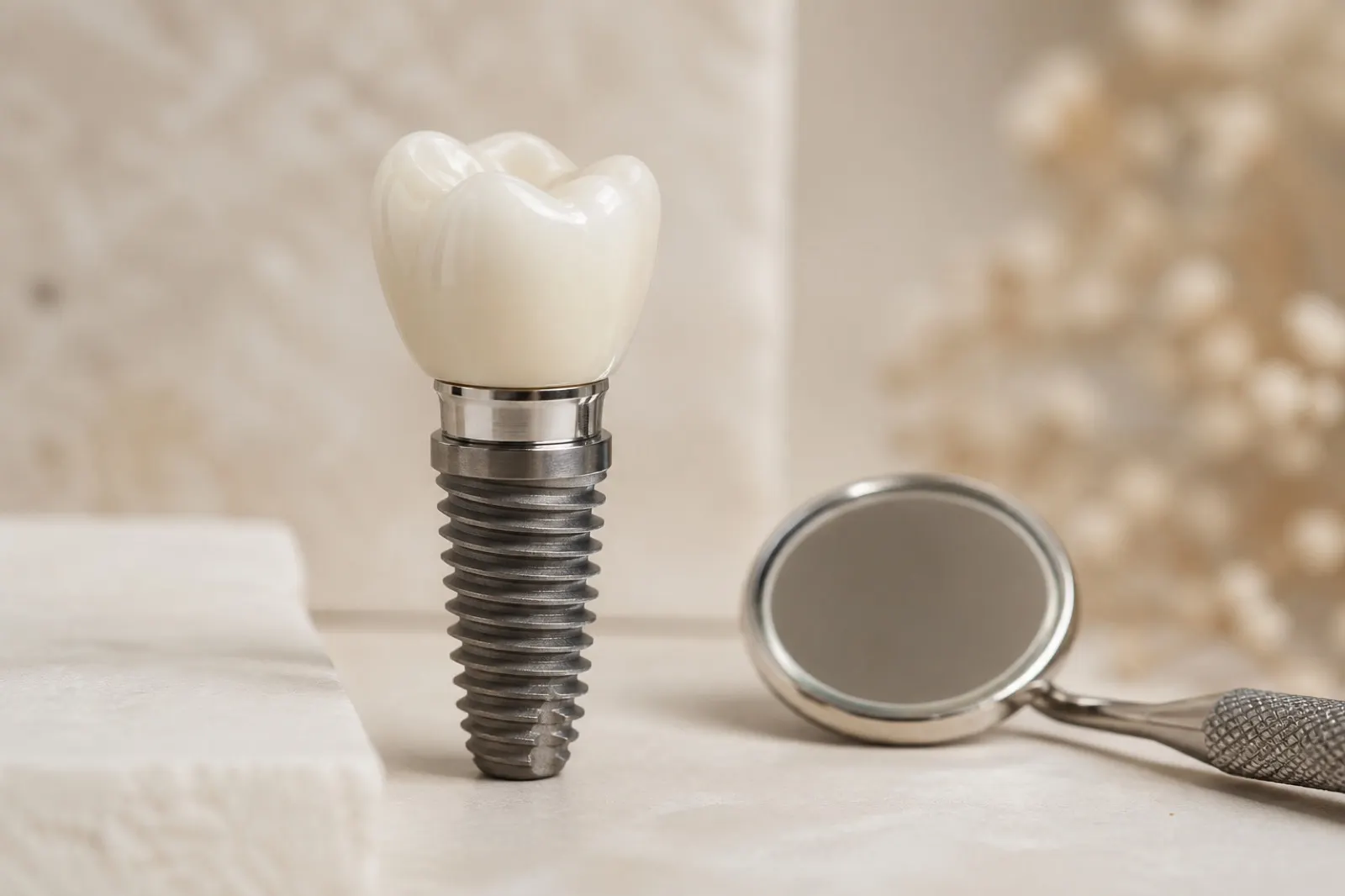
Dental implants are titanium roots placed into the jawbone in place of missing teeth. The aim is to restore chewing function by fitting a fixed prosthesis on top. Before treatment, the height and width of the bone are assessed by radiological examination, and planning is based on these measurements. Whether an implant application is suitable for the patient is determined by the dentist, assessing the general state of health and the intraoral findings together. Treatment results may vary from person to person.
Implant Applications
An implant consists of an artificial root placed into the jawbone in place of a missing tooth and the superstructure fitted onto it.
General information
Treatments under this heading
The method to be applied is determined after examination by the dentist.
Single Tooth Implant
Implant treatment applied where a single tooth is missing, without intervening on the neighbouring teeth.
View details
Implant-Supported Fixed Prosthesis
A fixed prosthesis fitted onto a limited number of implants in an edentulous jaw.
1 sub-treatment
Bone Graft and Sinus Augmentation
Procedures aimed at creating sufficient bone volume for an implant application.
View details
In which situations is it assessed?
- Patients with one or more missing teeth
- Patients who have difficulty adapting to removable dentures
- Patients with impaired chewing and speech function
Treatment process
- 1 Clinical examination and, where deemed necessary, radiological assessment
- 2 Placement of the implant under local anaesthesia
- 3 Integration with the bone (osseointegration) period
- 4 Preparation and fitting of the superstructure